


Food & Culture · 4 min read · 5 October 2026
Kashmiri food: what to eat and where
Wazwan and its etiquette, kahwa and pink noon chai, the old city's bakeries at dawn, and the winter harissa — a guide to eating well in Kashmir.
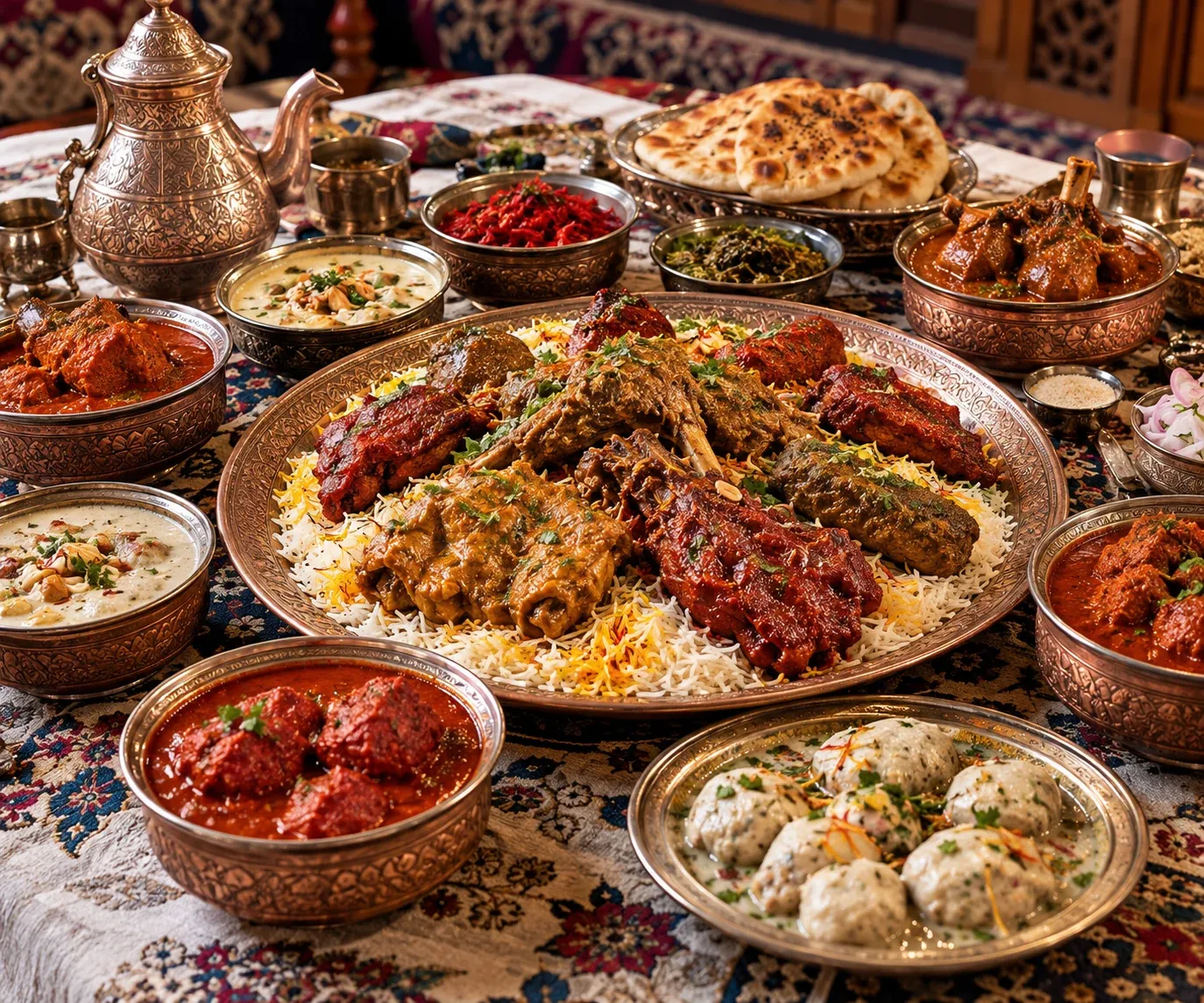
Food in Kashmir is ceremony and comfort in equal measure. There is the great feast of wazwan, cooked over wood fires through the night; the quiet ritual of kahwa poured from a samovar; and the baker's knock at dawn with the day's bread. Here is what to eat, how to eat it, and where.
Wazwan: the feast
Wazwan is Kashmir's ceremonial meal, served at weddings and great occasions and traditionally said to run to thirty-six courses, most of them meat. It is cooked by a vasta waza, a master chef from a line of wazas, and his team, in copper pots over wood fires that burn through the night before.
Guests sit on the floor in fours around a single large copper platter, the trami. A jug and basin, the tash-t-nari, comes round first so everyone can wash their hands. Then the courses arrive, each placed on the shared rice in turn:
- Rista: soft meatballs of pounded mutton in a fiery red gravy.
- Tabak maaz: ribs simmered in milk and spices, then fried until crisp.
- Rogan josh: mutton in a deep red gravy coloured with Kashmiri chilli and cockscomb flower.
- Aab gosht: mutton cooked gently in milk and cardamom.
- Yakhni: mutton in a delicate yoghurt gravy scented with fennel and mint.
- Gushtaba: larger, silkier meatballs in a creamy yoghurt gravy. It always comes last; when it arrives, the meal is ending.
Eat with your right hand, pace yourself, and do not leave early. It is entirely normal to take home what you cannot finish — hosts will often pack it for you. Wazwan is heavy and meat-centred; if you do not eat meat, tell us in advance and the waza will cook Kashmiri vegetarian dishes alongside.
The best wazwan is at a wedding, which is hard to arrange. The next best is a wazwan cooked for you by a waza, with time to watch the preparation. In Srinagar, Ahdoo's on Residency Road has served wazwan for more than a century and is a reliable place for a shorter version.
Everyday Kashmiri cooking
Home food is lighter than the feast. Kashmiri Muslim cooking leans on praan, the local shallot, garlic and dried red chilli; Kashmiri Pandit cooking uses no onion or garlic and builds flavour from asafoetida, fennel and dry ginger. Look for:
- Haak: collard greens cooked simply with mustard oil and chilli — the everyday vegetable of the valley.
- Nadru yakhni: lotus stem from the lakes in a yoghurt gravy.
- Dum oluv: small potatoes slow-cooked in a rich, spiced gravy.
- Chaman qaliya: soft cottage cheese in a turmeric and fennel sauce.
The best way to understand it is to cook it: an afternoon in a family kitchen is one of our most loved experiences — cook with a Kashmiri family.
Bread and the bakers of the old city
Every Srinagar neighbourhood has its kandur, the baker, whose tandoor is lit before dawn. The breads change through the day:
- Girda: the round morning bread, crisp outside and soft inside, bought warm for breakfast.
- Lavas: thin, unleavened and puffed, eaten with butter and tea.
- Tsochvor: a sesame-topped ring for the afternoon.
- Bakarkhani: a flaky, layered bread, especially for special occasions.
- Kulcha: a dry, crumbly bread made for dunking in tea.
Walk the old city early, follow the smell, and buy whatever has just come out of the oven. Our bakeries and kahwa walk does exactly that.
Kahwa and noon chai
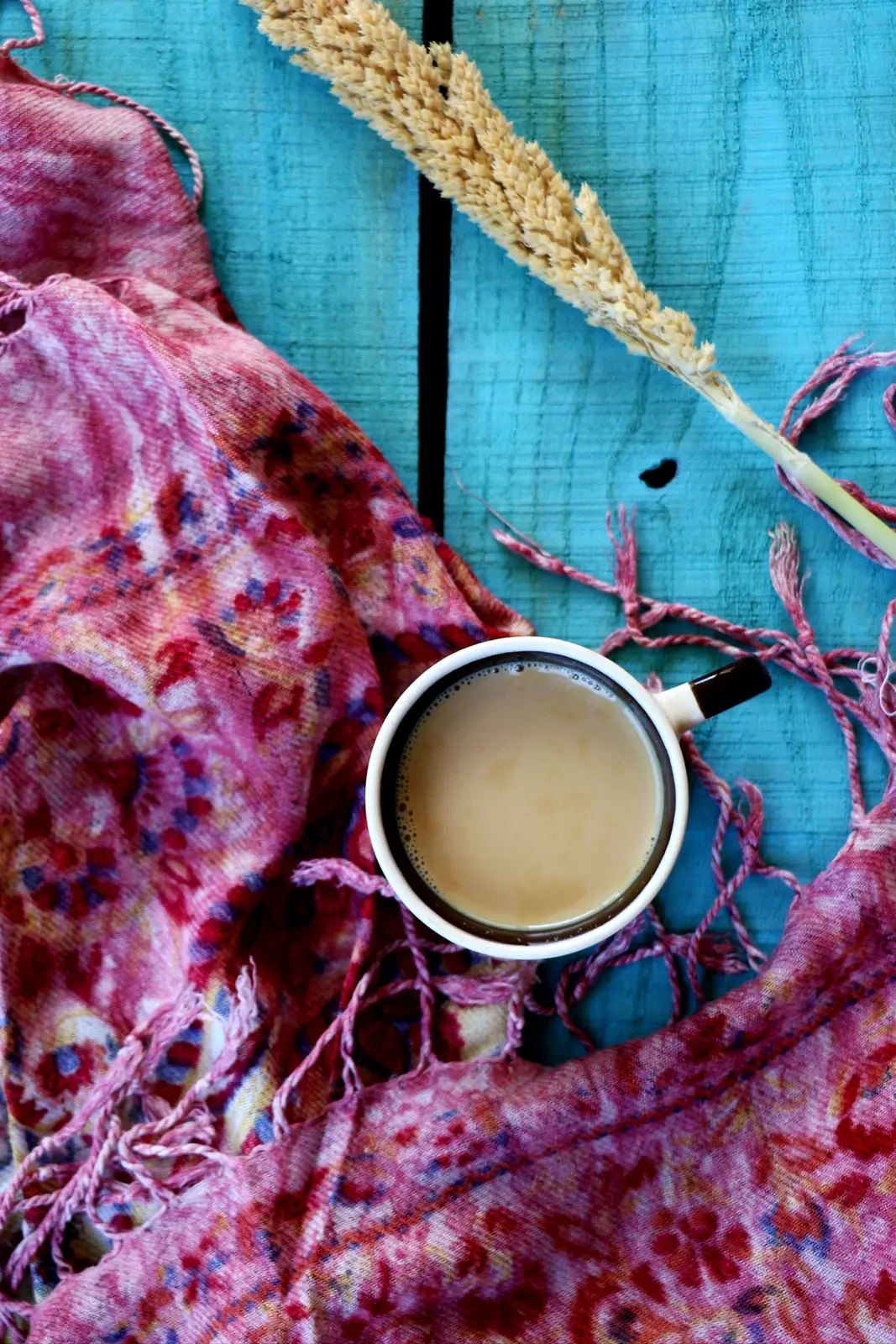
Two teas, two moods. Kahwa is green tea brewed with saffron, cardamom and cinnamon, poured from a brass samovar and finished with slivered almonds — the tea of welcome and of the afternoon. Noon chai, also called sheer chai, is something else entirely: tea leaves boiled long with a pinch of bicarbonate of soda until the brew turns pink, then finished with milk and salt. It is the everyday tea of Kashmiri homes, drunk with bread at breakfast and teatime. Try both; most visitors become devoted to one.
Winter food
In the coldest months, look for harissa: mutton and rice slow-cooked overnight until they become a smooth, rich paste, served at dawn with hot oil and bread from a handful of old-city shops. It is winter's great pleasure, and it is gone by spring. In the evenings, the barbecue stalls around Khayam Chowk grill seekh kebabs and tujj over charcoal.
Something sweet
Phirni, a set rice pudding scented with cardamom and served in small clay bowls, is the classic finish. Look too for saffron from Pampore — the real thing is deep red and should come from a shop you trust — and for the walnuts and almonds sold along the lakeside.
Come hungry, sit on the floor, and leave room for the gushtaba.
Food runs through every journey we plan, and we can build a whole trip around it. See our food experiences or tell us what you would like to taste.
Planning a journey like this?
Plan your journey